About Sharenting
Spoiler: This common practice comes with its own risks but not the ones you may expect. After listing the usual advices we'll give you our own.
A mixture of “to share” and “parenting”, “sharenting” is not about sharing about parenthood (that would have been a good idea) but rather the staging of children’s lives on social networks by their parents (in the broad sense).
The term made its little buzz in june 2023 because, as summer approached, and in our atmosphere of anxiety, many feared a cyber-tsunami of images of children in swimsuits on the child pornography market.
We will never know if this summer’s high tide has reached those dark corners of cyberspace, but this media hype has had the merit of drawing attention to a trivial but deletrious practice.
Sharenting Risks
Even if parental pride dates back to the dawn of time, new technologies have greatly democratized family story telling. If you historically needed to pay a painter to obtain a portrait to exhibit, then a photographer to obtain prints to distribute, it takes now only two clicks on a smartphone to tell the story of our thrilling adventures. To the whole world. And that changes some affairs.
The pedophile myth
Everyone born before the Internet knows the official baby photo. You know ! that one photo of a young baby, naked on a cushion, taken by profile, looking to the right! (Towards its promising future?) We could also cite the photo in the bath (where we see a mother's hand to prevent the baby from sinking), the one at the beach (in a swimsuit with bucket and shovel),…
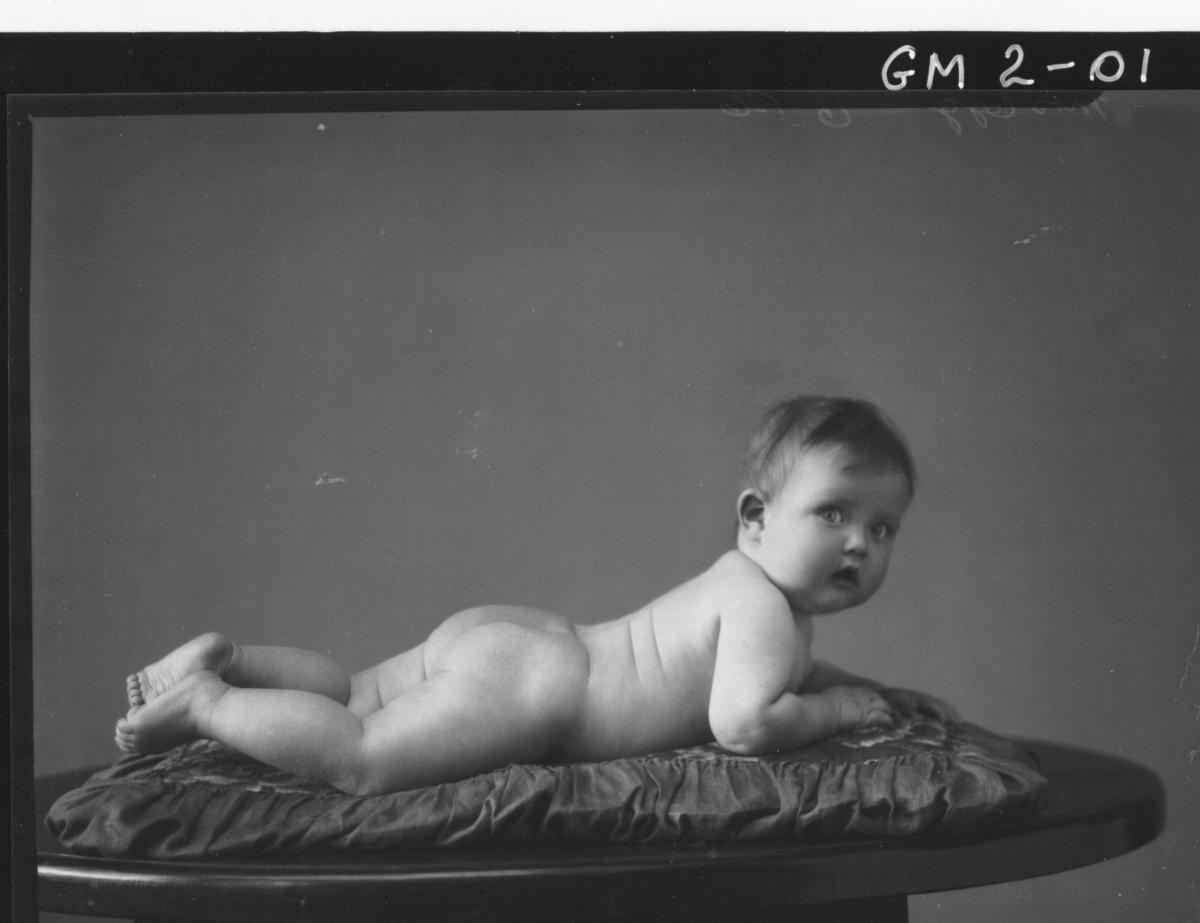
Before the Internet, those photos used to sleep in family albums and apart from rare occasions, they were not shown. And above all, no one could leave with a copy. The obvious violation of the model's honor was compensated by the secrecy to which the photo remained confined.
But with the Internet, and especially since the rise of social networks, family photos are added to more or less public albums, accessible all the time and of which we can make copies at will without anyone ever knowing anything about the copies.
Obviously, some perverse minds took the opportunity to create collections of photos of more or less naked children that they were able to find freely almost everywhere. This is how in 2015, Australian law enforcement discovered a pedophile forum containing 45 million images, about half of which came from social networks (cf. The Sydney Morning Herald).
It didn't take much for the press, elected officials and other associations to make the shortcut: “50% of pedophile images were taken by parents”… It's true that this version of the story makes more fear, a necessity for some sellers.
Spoiler: In all the pedophile cases we investigated in, we have never encountered this kind of content. We actually found large collections of very explicit content (several Tera Bytes, at least) but not a single one of these family photos.
While these family photos may end up in collections on some on-line forums, they are not the ones found in the seals we assessed.
Stalking or paranoia ?
Lots of computer security experts and privacy experts will teach you that the main risk, while sharing a child’s photo, is the publication of all those information that the file disclose (where, what, habits,...) and their exploitation by the Bad Guys.
Ok. But in real terms ?
The reality is that most of those information have no value, or said better, no public. The Bad Guys don’t waste their time by profiling a specific child. Extracting meta-data about this child in order to build a psychological profile, listing its neightborhood, habbits, sites,... For what purposes ?
This form of criminal harrasment, throughout child’s photos, exists only in the following three cases:
- You are a celebrity, your most monomaniacs fans want to know everything about you, your family, and thus your children. It’s a known risk of your job and you already know that your public image need cares.
- You are a teenager and some classmates want to know everything about you. It’s more about bullying and the meta-data are not the information they seek for.
- A relative (i.e. ex-partner) want to harass you ; through you children. In this case, contact your local police or dedicated associations (i.e. Echap in France).
Except those particular cases where you know that you are the target of a stalker (and can thus takes actions), all that remains is a matter of paranoia: feeling of exagerated importance associated with belief of persecution.
By the way, none of the classical solution that always comes along (and that we will list in the following) does actually work against a stalker. This risk is then only mentioned to generate fear (and enforce a call to action).
Misuse by platforms
More pragmatically, the first misused of published photos is made directly by the platform itself. What kind of use ?
Firstly, they add some information that identify the content itself. The idea is to be able to know when the contents come back again through another user. By registering your relatives, they can improve your profile.
We can also think of an algorithm that recognize the content of the picture around the child and use it to improve your profile. But your interactions (e.g. likes, comments, attention times) are lot more efficients.
Then, they will add your content along their promotional content shown to your friends (but not only). The idea is that your friend (or the public in general) will find the content more positive and may better engage with brands. Unwittingly, your children are know the brand’s ambassadors.
Finally, your content will be added to learning database for a bunch of artificial intelligence algorithms, including those that generate contents. And that lead to two new problems :
- You’ve worked, for free, to produce content that improve algorithms that will be sold to replace humans.
- Your content may be reproduced, identically (or so) by the AI for some end user that use it to produce some publised content. Plagiarism but none of you are aware of.
The remain belongs to the myth. Platforms can effectively create books with our writings, exhibition with our photos and posters and comercials video clips. Buts those are not their core business, it’s the jobs of third parties.
Misuse by third parties
What a very smooth transition!!! But who are those third parties? As their name suggest, they are three (mouhahaha).
First: Brands. When their products appears (in good favor) in a publication, brands usually republish it (or whatever is the official platform’s term). Some users exploit this habit by tagging their content with a brand’s name, being notified about this content, the brand can now republish it. A kind of win-win situation where both of them gain more attention. A kind of micro-sponsoring.
But it may overflow the usual cases. Some brands can extract the child’s image and integrate it in their own promotional contents (i.e. as witnessed in reddit).
Second: Parasites. You don’t know them, they don’t know you either, but they found your content usefull for their more or less legal own products.
It happened to an adult that publish a “before/after” picture of himself and get the woes of being reused in all those dietetics scams. It also happened to a child whose photo was used in a book about its village.
The list won’t be complete without all those mythos that hijack your content and republish them to invents their own life or invents their own children. The advantages of story telling a wonderfull family, without the real world constraints...
Third: Trolls. Most of the time, it’s only about stupid and malicious taunting: find images, turn them ridiculous and have fun despite collateral damages.
Some are just awkward but it may be worst. With original photos, modified ones or made by generative AI (replacing the face on other scenes), some trolls falls into harassment, blackmail that may lead to suicide (i.e. in Egypt in 2022).
Dispossession
And for those truly dependent parents that can no longer live without publishing their children’s live, another more subtile risk arise ; dispossession when seeking for approbation.
The vicious circle is as follows: you gains likes depending on what your public wants and since it is nice to be approved, you republish to gain more likes. One step at a time you will modify yourself to conform to what (you think) you public wants.
For the parents, it’s only about story telling and staging to demonstrates some gratifying parenthood lifestyle in their cyberspace’s corner. But they ends up doing what gains likes (and sponsor) instead of what they want or belief.
Children are not spared because they are the subject of the story. It’s their job to conform to the public’s will and it’s their behavior that need to conform. The childish reckless they need to grow in is replaced with a permanent theater scene where they must endorse a role written by the network.
What about the laws
Disclaimer : The following paragaphes cites mainly french laws but some jurisprudence comes from abroad. The situation doesn’t change a lot amongst European countries and the main ideas are found in a lot of countries. If you need a precise advice about your situation, call a lawyer.
About Pests
If the child’s photo have some pornographic content, it’s pedo-pornography and this is prohibited (art. 227-23 of Criminal Code). Taking the photo is prohibited (5 years in jail and 75 000 € of fine), looking at them also (same sentence). Use of Internet increase the sentence (7 years and 100 000 €), even more if done in groups (10 years, 500 000 €).
If the child’s photo is used for mockery, it’s also prohibited because it may falls into “defamation” ; claims of dishonoring false facts (July 29th 1881 law about press freedom). There is an exception of truth (if the facts are true), a statute of limitations (3 months, after it’s too late) and you should not confuse with insults.
If the photo is used for bullying, it’s harassment (art. 222-33-2 and following of Criminal Code). It needs repetition (twice at least) or being done in groups. Use of Internet increase sentence.
The remainder is about “image rights” which can be found in three codes:
Civil code: that tells that we all deserve respect of our privacy (article 9), one can not publish images that brake our privacy.
Criminal code: prohibits taking images (and sound) without asking for (art. 226-1 to 226-7). You cannot create montages if it is unclear that it’s a montage (article 226-8).
Intellectual Property: if the photo is a creative peace of art, copies are conterfeits (art. L335-2).
About Platforms
We must now talk a bit about the platforms’ “Terms of Service”. Except when incompatible with usual law, those rules have the strenght of law between contractors (art. 1103 of civil code).
The reading of those documents may be boring, it remains interesting because it helps unveil the true nature of the platform hidden behind marketing curtain.
First, all platforms takes the licence to store and distribute your content. Understandable since your ask them to publish your content, they need to store and distribute.
But they also take the licence to modify and reuse your content for their own purpose. Including personnal data and activity. They also take the right to sell those rights or “sublicence” to third parties. Worldwide. Forever.
Some platforms restrict those right depending on your confidentiality settings; only public content fall into this exploitation. You must know that your profile’s photo is always public and nothing prevent a follower to republish your content publicly. Other platforms do not bother with those consideration (e.g. in TikTok anyone can do anything with any content).
For third party, they need a licence from the platform and they can not extract the content to republish it in their place (cf. TJ Paris, April 13th 2022, 21/03690). There seems to be an exception if the content is only embeded, for instance with HTML tag iframe or ̀embed` (cf. Sinclair v. Ziff Davis, LLC Dist. Court, SD New York 13/04/2020).
Those kind or Terms of Services are or course abusive and illegal and you can ask to cancel them. That’s what UFC Que Choisir asked for agains Facebook in 2019 (cf. TGI de Paris, 9 avril 2019, 14/07298) ; the free infinite worldwide sublicensable right were considered abusive and illegal.
About Parents
At first, to materialize a risk, we need a parent that share a child’s photo. Even if parent own the “parental authority”, they can not do anything they want.
For influencers. If the parent’s job consist of publishing it’s life and sell its public attention to brands, we must first recall that children can not work (cf. Art. 32 of the charter of fundamental rights of the Eruopean Union). Then that a child need prior authorization to work for an audiovisual company and if the child is the main subjet of the image, an accreditation is needed (cf. Law n°2020-1266 of october 19th 2020).
Joint Authority. Parent can usualy takes decision alone concerning their children. But Important decision must be taken together. TV Show is one of those cases (cf. Cour d’appel de Versailles, 11 septembre 2003, n°02/03372) and that have been extended to any support (cf. Cour d'Appel de Paris, 9 février 2017, n°15/13956). The only exception is about private diffusion where only one parent is needed (cf. CA de Bordeaux, 4 janvier 2011, n°09/00788).
Child’s Benefit. Lastly, since 2002, the Parental Authority is toward child benefit, to protect its privacy and help its development with respect (cf. art. 371-1 of cilvil code). Parents can be held responsible for the consequences of shared photos.
This is the reasoning followed by an italian judge about a teenager that ordered it’s mother to remove any photos and comment about her son in social networks and prohibit her to publish such material again (Rome’s Court, first civil chamber, December 23rd 2017, n°39913/2015).
Laws’ limitations
In theory, the law is enough to protect our children against those risks. Decisions have been made in this direction. But do not count on the law because it as its own problems...
Proofs. Judges will need proof of you claims. Harassement is quite easy because you recieved the files. Misused by the press and media depend on its fame. The more private context, the more difficult it is to find the misuse. An AI chatbot can thus plagiarize anything because nobody will ever be notified of the fraud.
Delay. Let’s consider you have proofs. You need to act without lateness because there are some statute of limitations. The rules are numerous, to summarize you can consider 6 years after the problem (3 month for defamation).
A precise answer for your particular case need a lawyer.
And let’s consider that you were on time. Justice will take time to proceed. Between 2 and 3 years (mean of 49.4 month in 2021 in France, cf. vie-publique.fr), same at each appeal. So even if you are sure or the outcome, you’ll need patience.
Gains. Justice creates sentence but rarely fixes. Authors may have to spend some time to jail and pay a fine in the hope they “learned the lesson” (being efficient is another debate) and the judge may ask for some compensation but is the problem really resolved ?
For some youtubers, getting 1000 € because their son was displayed in photos in a magazine without their authorization (cf. TJ Paris, 13 avril 2022, 21/03690, citée plus haut), is aligned with theyr values (they sell their images to brands). But for other parents and children, it may not fix the prejudice.
But let’s consider you win your case; you were patient, the sentence have been made, the content have been suppressed and your ever have gained some financial compensation. Youpi 🎉️ ! Or not ?
Streisand Effect. In the cyberspace, the simple fact of asking for content deletion generate a new interrest on the subject. A niche publication, seen by a few, can now becomes viral ; everyone talking about those copies they saw.
You won your case, the photo have been suppressed on the media you ask for. All your effort lead to a mass circulation of the photo to an even bigger audience and in private messages against which you can do nothing at all...
The whole show business is not able to prevent warez, how could you do better?
Usual advices
When talking about “security on the Internet” and more specifically about “privacy concerns”, we usualy find those three first advices. They seem common sense but they are not that efficient.
Signal / delete
When you see a photo with you child (or yourself) on a platform, it’s usually adived to ask for deletion.
You need to find the menu icon along the content that opens a menu with a “signal” button. The next step depends on the platform. Despite having said that your privacy is theyr main concern, the process will take some delay (several days) to proceed and may end up with “no enough information”.
Why this delay? Officially : no enough resources (but it was said to be their prime concern...) and/or technical limitations (computers are good excuses).
A more realistic and cynical answer: contents reach their full potential in several days after which they disappear behind the flow of new contents. This delay “out of their control” let them exploit your content, get more engagement. After the delay, your content has no more value for them and they can proceed.
Keep in mind that the image have only been deleted where you saw it and is still available everywhere else where it have been (re)published. The Streisand Effet is playing against you.
Hide the faces
Before publishing child photos, some parents (or adults) hide whole or parts of their faces. Thinking that it is enough to make them anonymous and allowing publication without risk.
If you think about it thirty seconds, you will see that it avoid none of them:
- Pedophile are not interrested in the face,
- Photos can still be copied and misused,
- Photos can still be retouch, including by AI that replace the hidden parts,
- Those photo still generate pressure on the child’s behaviour,
- And especially, children are still recognizable by their relatives and neightbours.
You somehow respect a little of their right of image but not at all theyr privacy.
Pervert effect: since the children know that the technique is useless, what theyr understand is that you are not proud enough to show them.
Privacy Settings
Last advice usually given: take care of your privacy settings to restrict the use of your content. The platform promise you that your publication will remain visible only inside the group you asked for.
But the platform does not forbid any member to republish the content (or the publication) elsewhere. You thus need to trust the group’s members to respect your will to keep those photos private. All of them.
If one of them republish, all your precious settings are useless. You need to clear the group member carefully and then, hope. Hope that you did not miss someone. Hope that some member won’t send the content to an ex-member. And hope that none of the remainder will change their behaviour (e.g. after an argument or a divorce).
Good to know : profile’s picture is always public.
Last but not least: promises only bind those who believe in them. It’s not because the platform said, hand on their heart, that your private picture will remain private that no leak will ever happens.
Our advices
Contrarily to usual advices that rely on technology to solve problem it create (but fails at it), our advices are deeply human.
Fight for respect
When you encounter a picture of your child without your consent, contat the author, asking for deletion.
If the publication was by a relative (friend of family), contact them and recall them this simple rule : you are the only ones that own the right to publish your children’s photos. Without your consent, they can not publish any photo. Same for grand parents.
If the publication was made by a media, institution or company, you can also contact them but you have two way to ask efficiently for deletion:
- Send a formal notice (via internal message ou email). Be factual, your message must contains: who you are, relation with the victim (parental authority), reference toward problematic content(s), the references to the applicable laws and then a realistic delay after which you will be forced to take other actions.
- Send a public message (comment below the content, their pages or a dedicated publication with hashtags). Since their honor is attacked, they’ll have to reply and react. Be warned about backfire (Streisand effect or deffamation claims).
You can do one, both or the first then the second if you get no reply. In either cases, be courteous and once the content have been deleted, express your satisfaction and thanks (publicly if the message was public). Your message have hurt their honor, your thanks will repair it.
But do not lose your time with a first shy message. Pests consider kindness as weakness and will continue their misuses. And the rare clumsy won’t be hurt that much with a curteous message that help them learn the rules.
Anecdote. Some years ago I had to call a town hall to delete my child’s photo on Facebook. My formal notice (through Facebook message) get the problem solved within one day. Since then, another family had the same problem but prefer to send more gentle messages first and get no attention. They now hire a lawyer and the proble isn’t resolved yet.
Note to children and teenagers that may read our articles and do no longer want their photos on the net: you have the right to ask for deletion. Amongs usual resources to help you (Police, lawyer, judges, ...) you can ask Data Protection Authority (i.e. CNIL in France).
Don’t feed the Trolls
From time to time, author won’t delete the image or it have drawn such attention that it’s now impossible to delete all the copies that have spread all over the cyberspace.
You must understand that some mediatic tsunamis can not be contained. In those situations, the more energy you put defending your right to privacy, the more the ware increase itself ; the Streisand effect with full power. There’s nothing to do against that phenomenon.
In the early days of Internet, we used to call that a Troll. A fantasy monster, vicious and so stupid that you can not reason. This creature feed itself from the conflict it generate on-line. The more you defend yourself, the more you participate in the conflict, the more you feed the Troll.
The only one solution to defeat a Troll, is to starve it and let it go. To handle the published photos when they are real. Accept that one can not prevent the public to fantasize and create its own stories when the images are fakes. You can’t do anything, it all in their mind.
Of course, the Troll’s inertia will give him enough energy to play with your case for a while but without reaction the Troll will get bored. Since there is plenty other occasion to troll on the web, it will move on and let you in peace.
Meanwhile, support is needed because letting go in the mediatic storm is nor easy nor pleasant. Even more for kids and teenagers whose brain are not fully mature and whose emotions are exacerbated.
Regain your equilibrium
The only trully working solution in the long run, to avoid the risks, is to consciously evaluate them before sharing anything on the web.
Seems complicated? Yet quite simple when one know how to do.
Rule 0: Never the same day. Whatever the situation, never publish anything in cyberspace the same day you get the idea of sharing it. Being a photo, a comment or even a like: wait at least tomorrow.
By applying this simple rule, you are breaking all those dark pattern used by platforms. Those user interface widgets and habits that are making you publishing without thinking about it.
The benefit of a whole night of sleep is a clean brain. Imagine shaking an aquarium, all the mud sprays around and you can not see through it. After a while, the mud fall in the bottom and the water is clear, you can now see through it easily. The brain is the same, it needs break to be clear again.
And if you worry about forgetting about what you wanted to publish, perhaps it was not so important in the end.
Rule 1: (re)check before submition. So you took a break and are still wanting to publish your content, take a breath and check now that your publication does not contains anything harmfull. There is only two criteria:
- You and your child must handle the content, including if it becomes misused.
- Nothing hostile; cyberspace is an amplifying echo chamber and everything hostile will backfire.
The rule is difficult to apply to a particular content? Restart at rule 0, take a break, sleep a night and see you tomorrow.
And that’s all 🎉️ !
One step at a time you will realize that you don’t realy need to publish all the stuff you used to publish. That this deep need was not yours but instilled here by the platform’s marketing and network pressure.
When one realy need to share a photo with someone else, one can always use MMS, emails or, let’s be adventurous, by postal mails.
Children’s opinion and responsibility
Since the images are showing our children, they are the one who will handle the consequence, they deserve we take they opinion in balance.
The problem is that children’s and teenagers’ brains is not able to take that decision. Their prefrontal cortex is not mature enough and has not enough training to handle the pros and cons; they tend to do what they please them (regardless of the consequences). Being said that in secondary education, their popularity is their top one priority.
The rule we propose here is quite simple: consider that the parental authority consent needed to share a photo include the children. Your child is member of this triumvirate and each member as a veto.
The children may say no because they don’t want to handle the consequences. Adults may say no to teach their children that there remain some risks and learn good habits.
And after?
The problem with sharenting is that our parents were not able to teach us the good habits on-line for the simple reasong that cyberspace did not ever exists. They were able to share pictures of us with their friends and family because it was nearly impossible to make such copies and fakes with glossy paper.
Managing risks of sharenting by applying good practices is not only a matter of respect of our children’s privacy and image right. It’s a matter of parenthood by example.
It’s about giving them reference points from which they can build a more positive experience of cyberspace and transmit to their own children.